Project 6: Radiant light with objects and figures
When radiant light comes into contact with smaller forms, light and shadow appears. This is the most important concept of all. Reduce everything to light and shadow first. Cast shadows are created by the object and spill into the surroundings. Reflected light from the local scene can bounce back into the form. This is the complete polished 3d effect. The general rule is if the direct light is a certain hue then the cast shadow will be the opposite hue or complementary on the colour wheel. Bounce light will absorb some of the local colour of the surrounding ambient light. Bounce or reflected light is always softer or weaker than direct light. Criteria for this project: Create a radiant light source of your choosing. Consider, the HUE, SATURATION and TONE. Place it in a location on your page. You are the artist, you decide. Place two figures that are 6 feet tall ( your choice) and two cubes: One 2 feet squared, the second 8 feet squared in a composition within the atmospherically lit landscape.

Student sample.
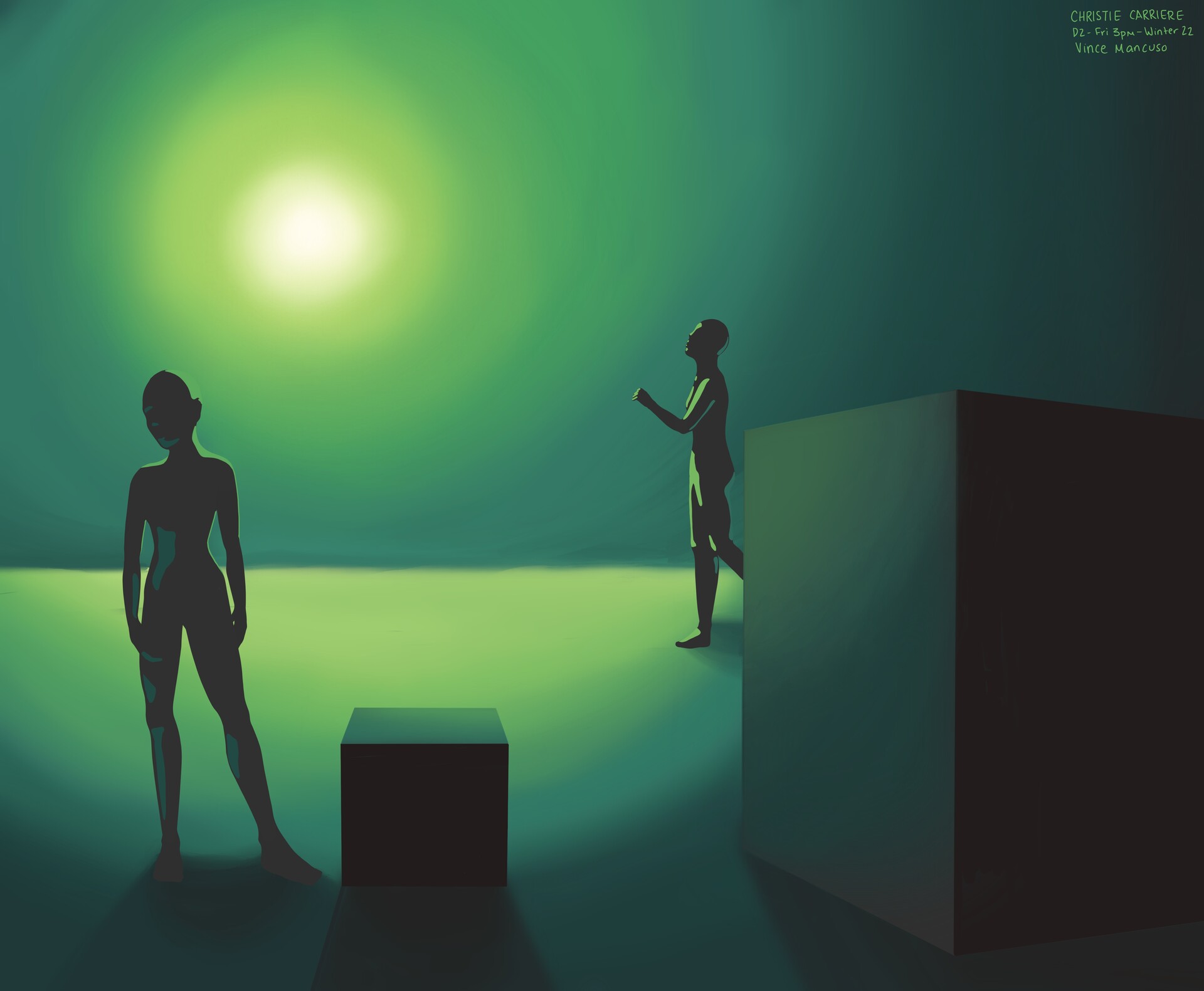
Student sample
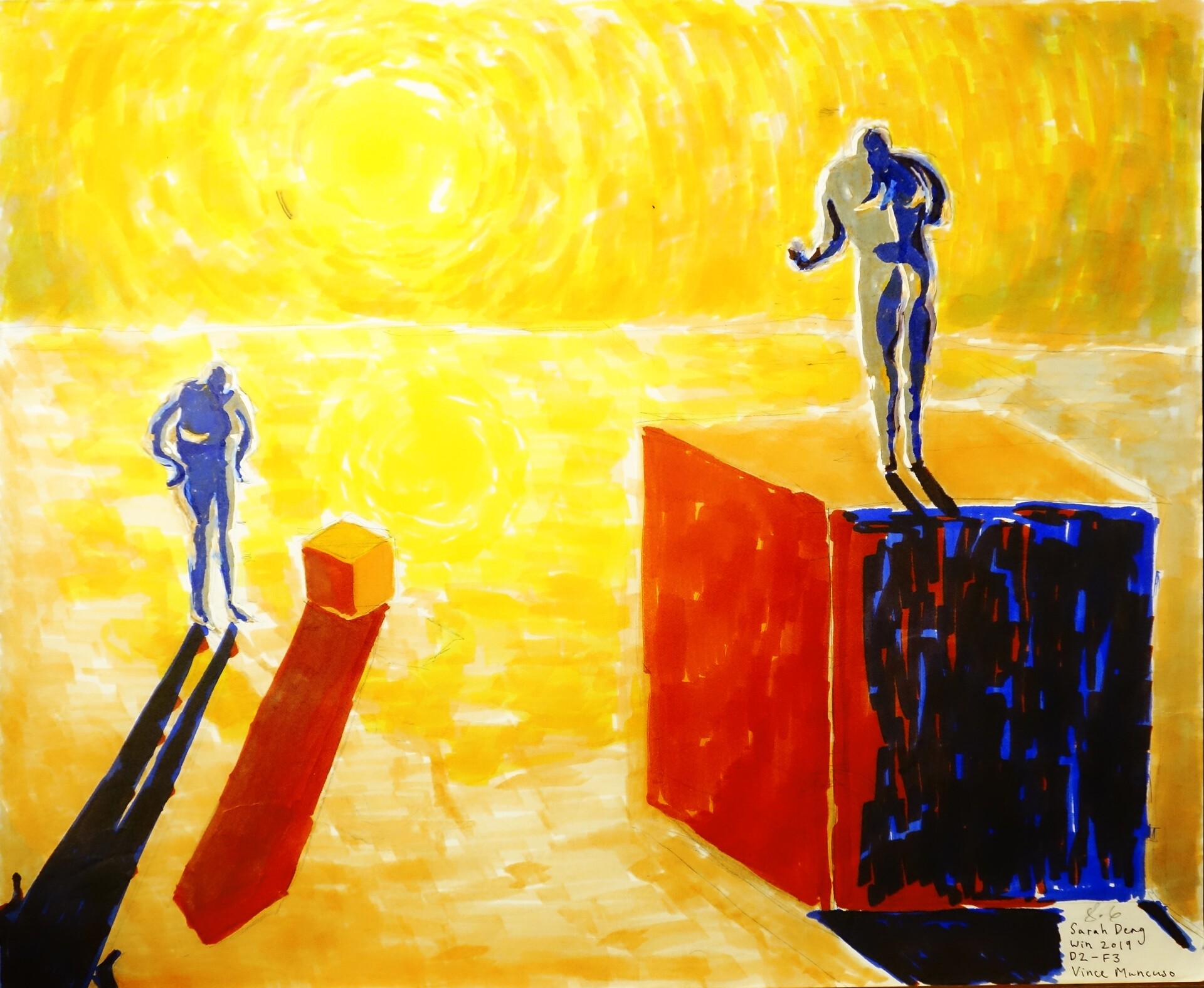
Student sample.
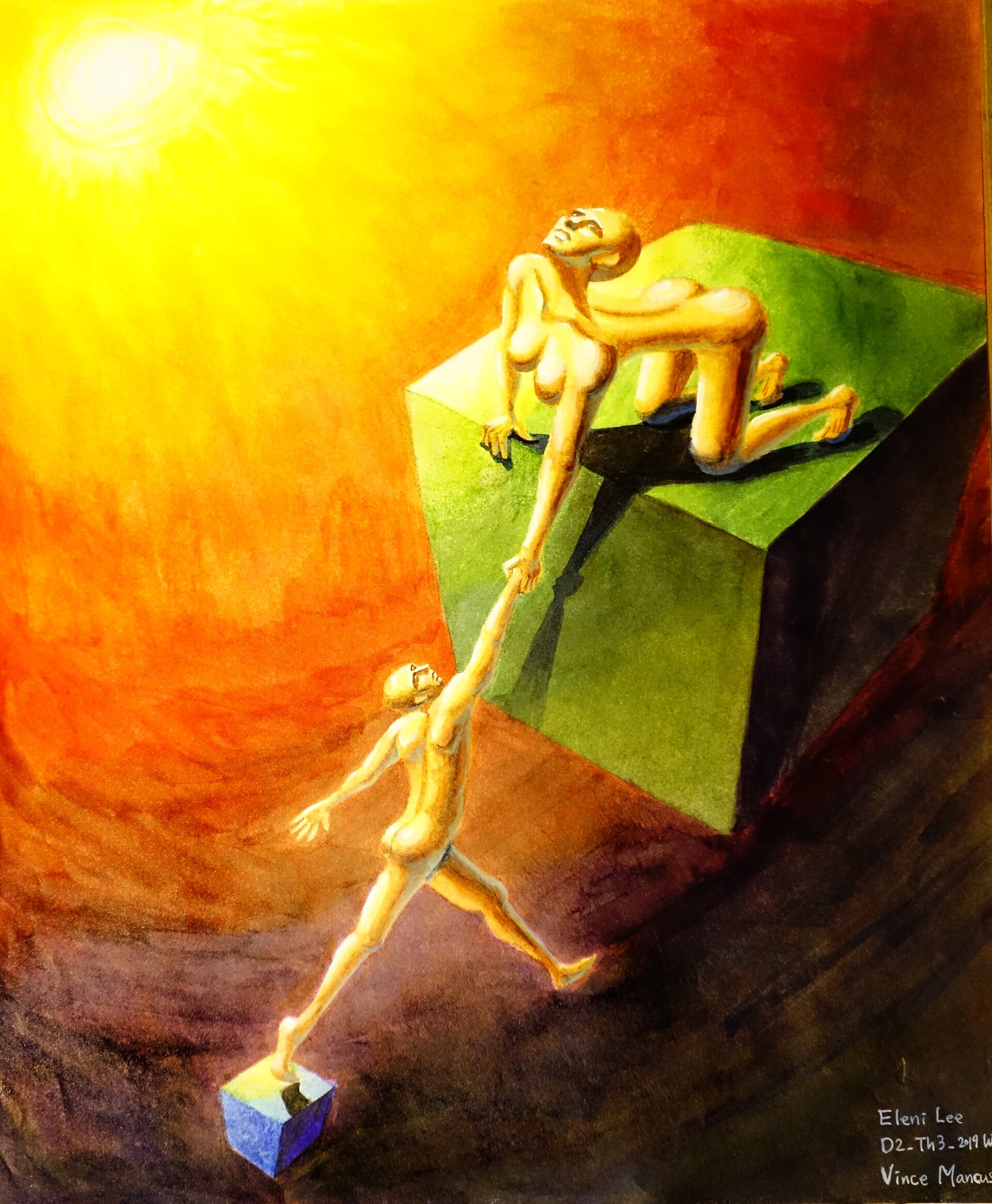
Student sample.
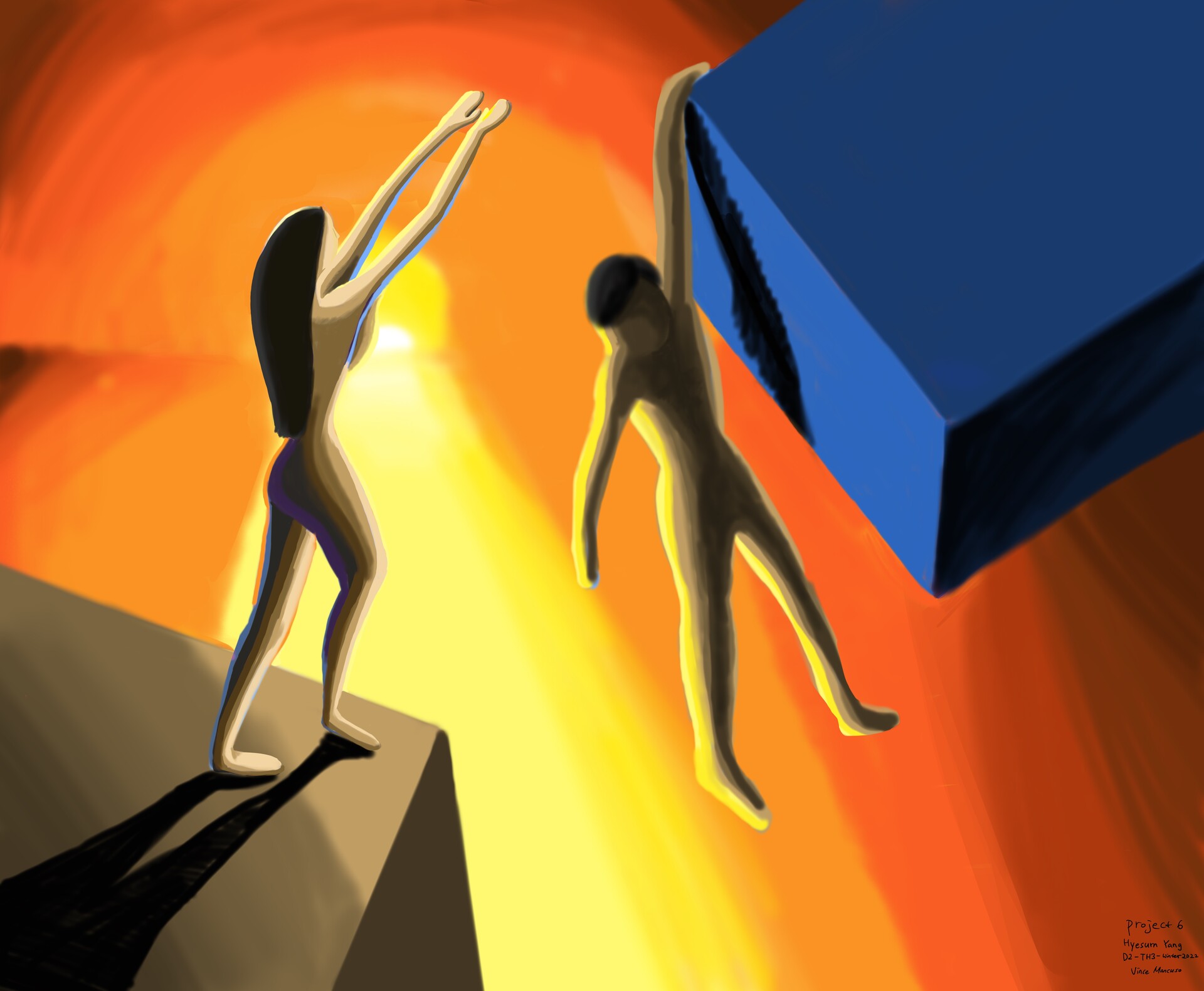
Student sample
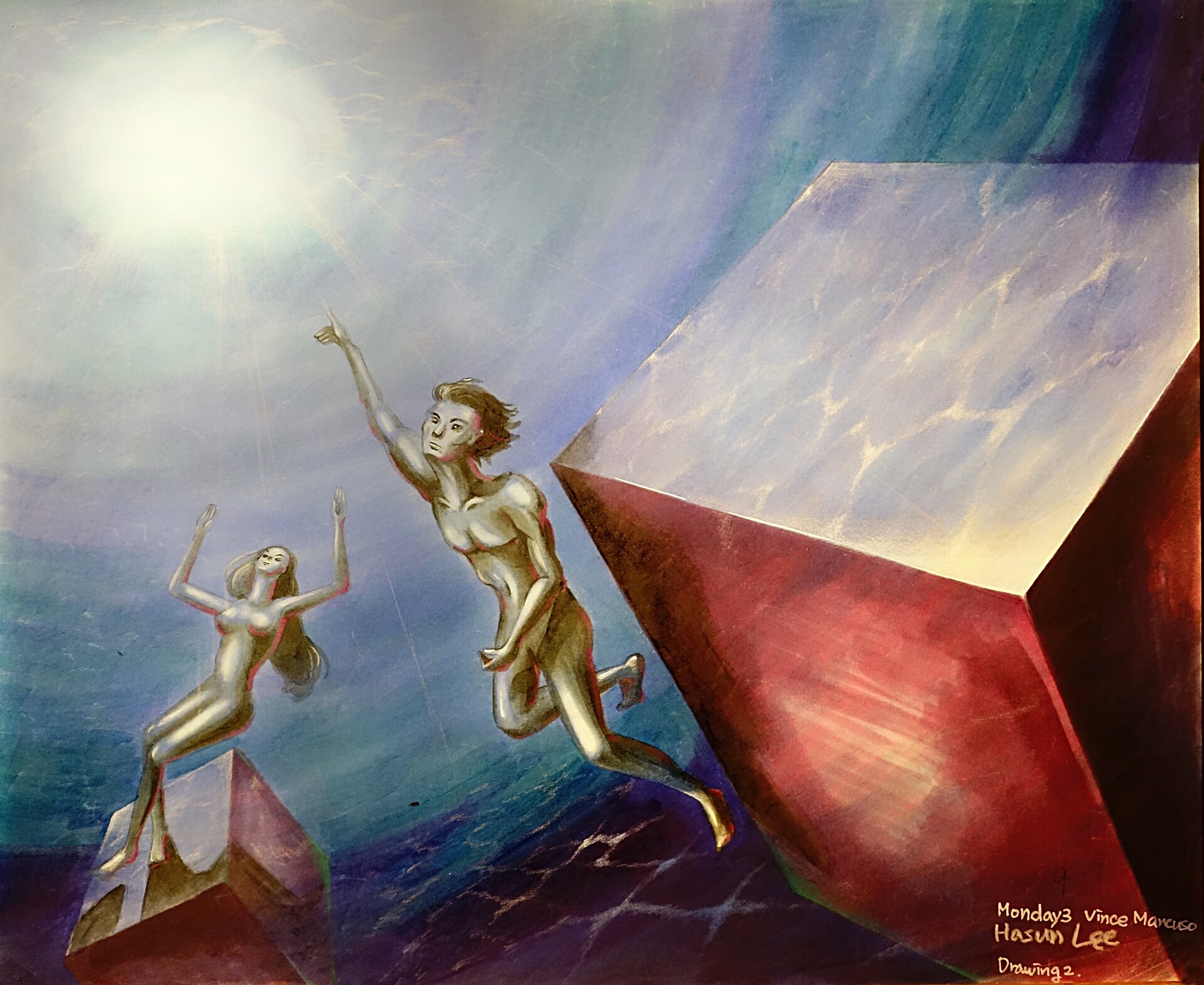
Student sample.
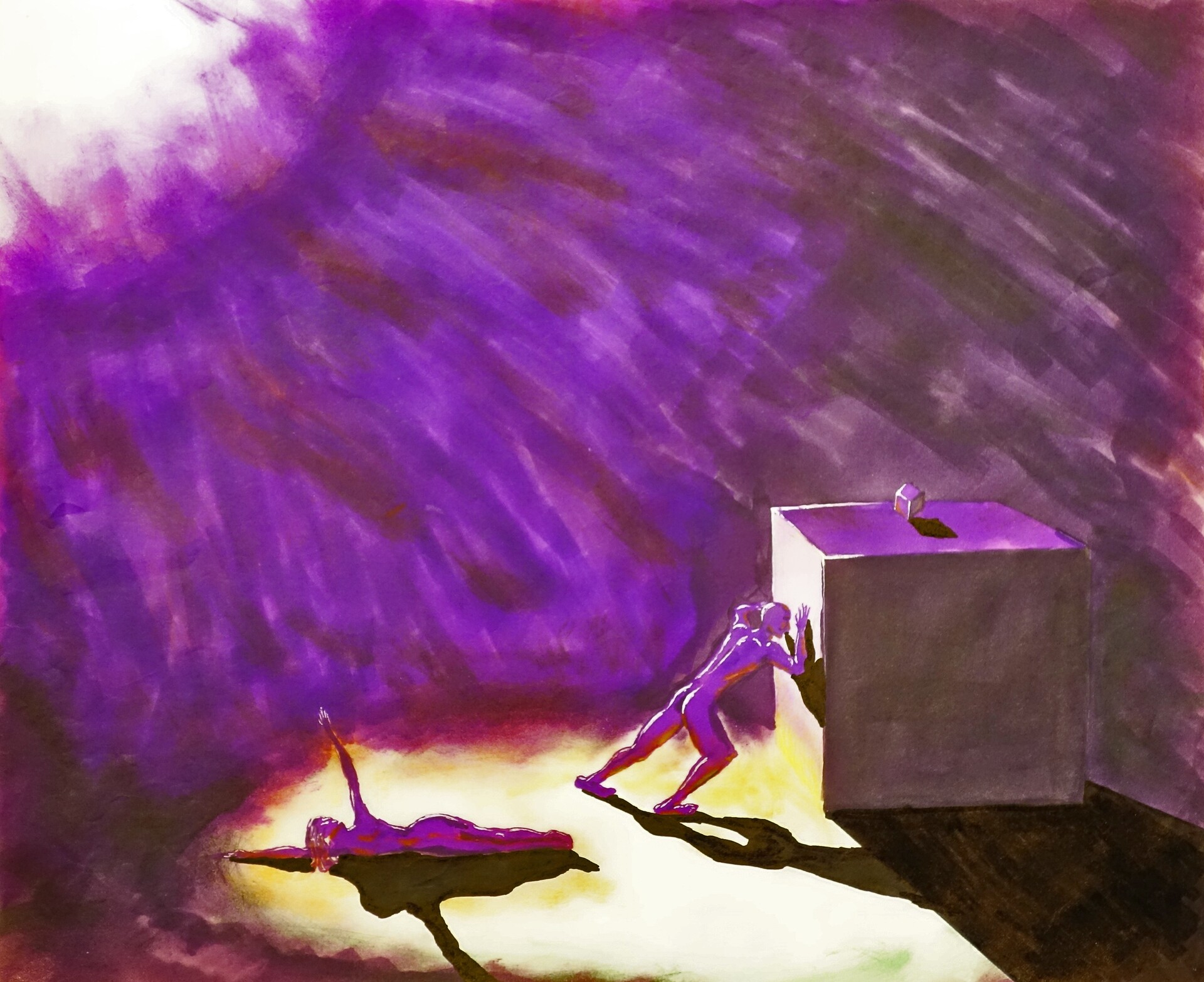
Student sample.
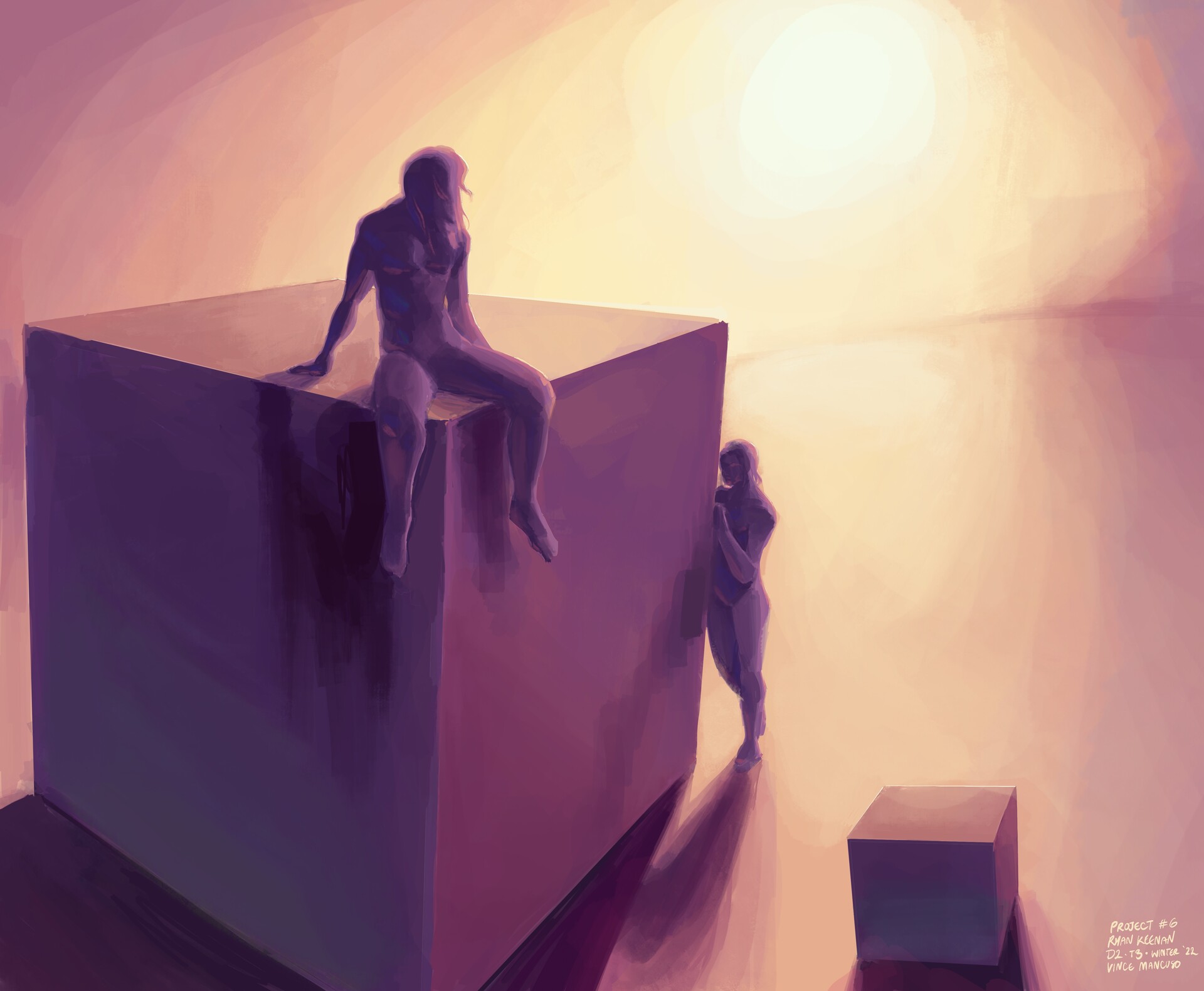
Student sample
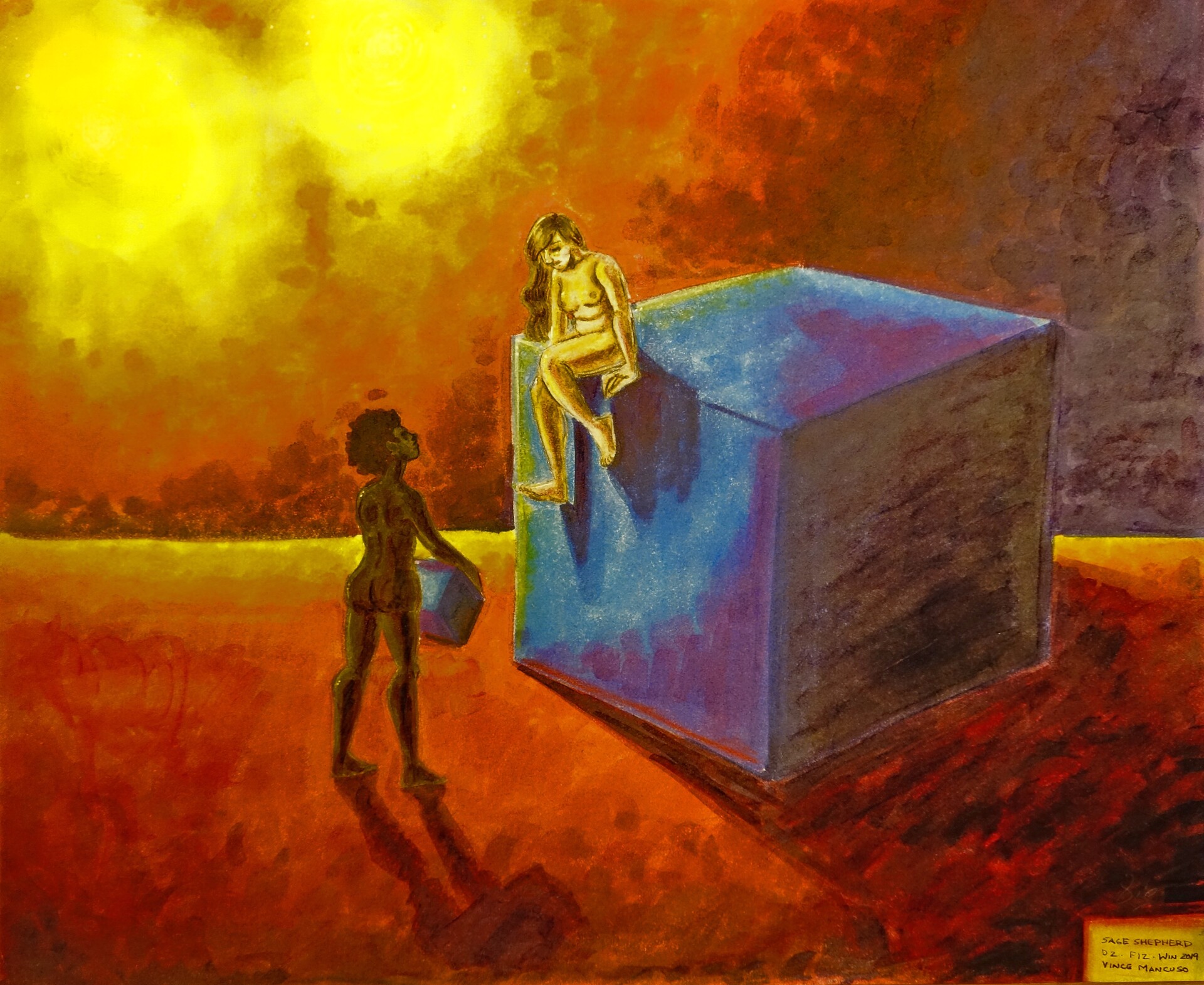
Student sample.
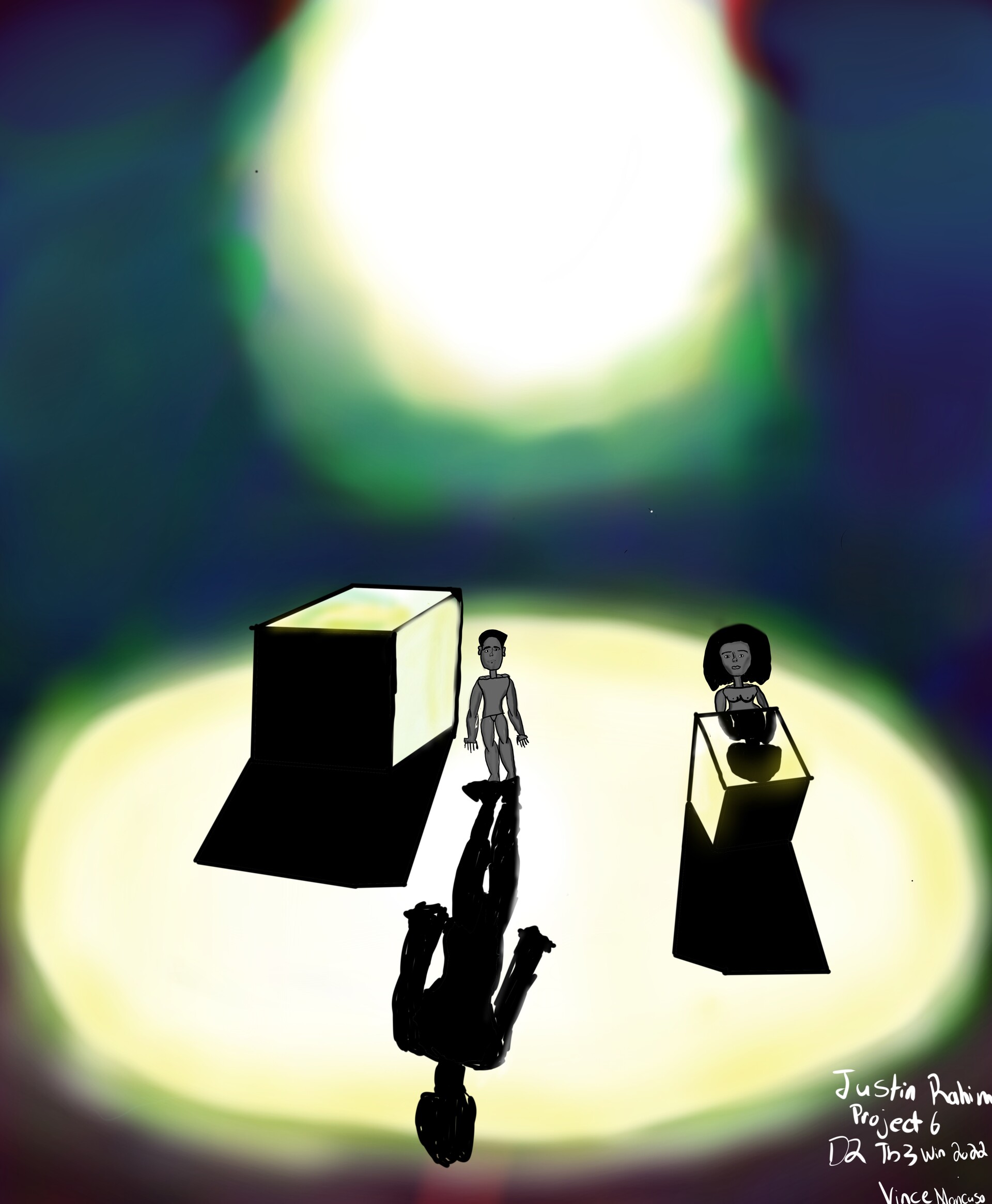
Student sample
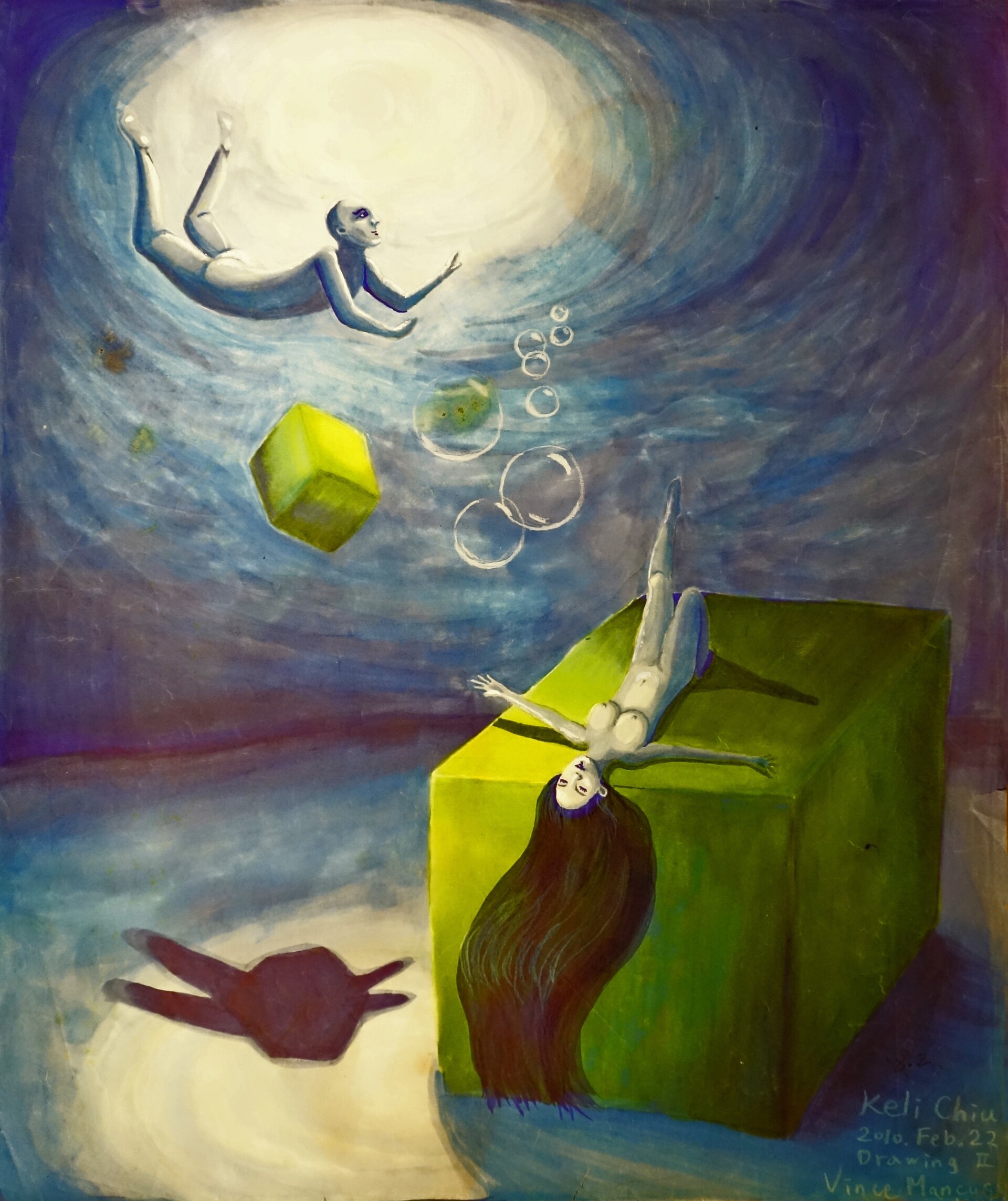
Student sample.
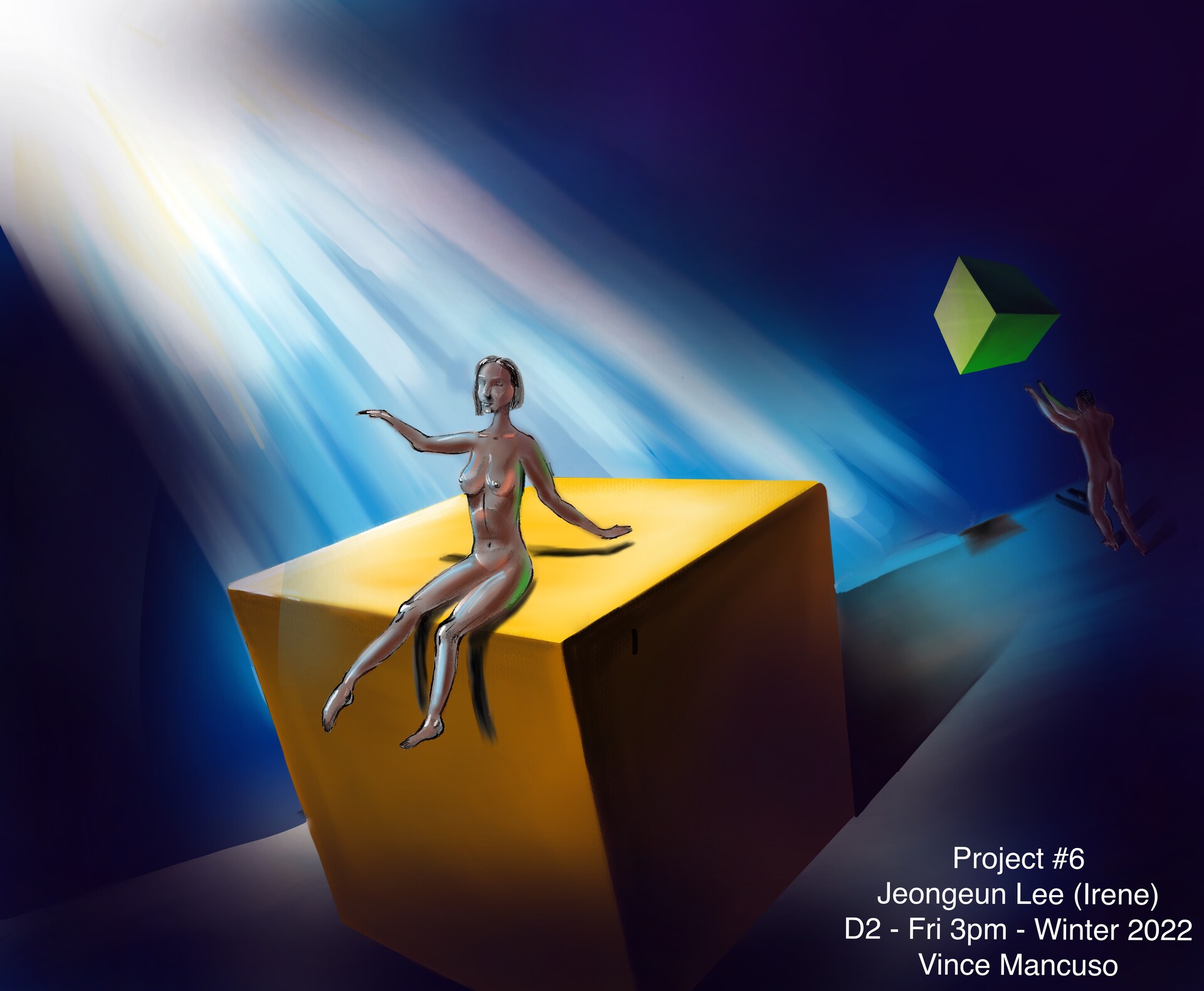
Student sample
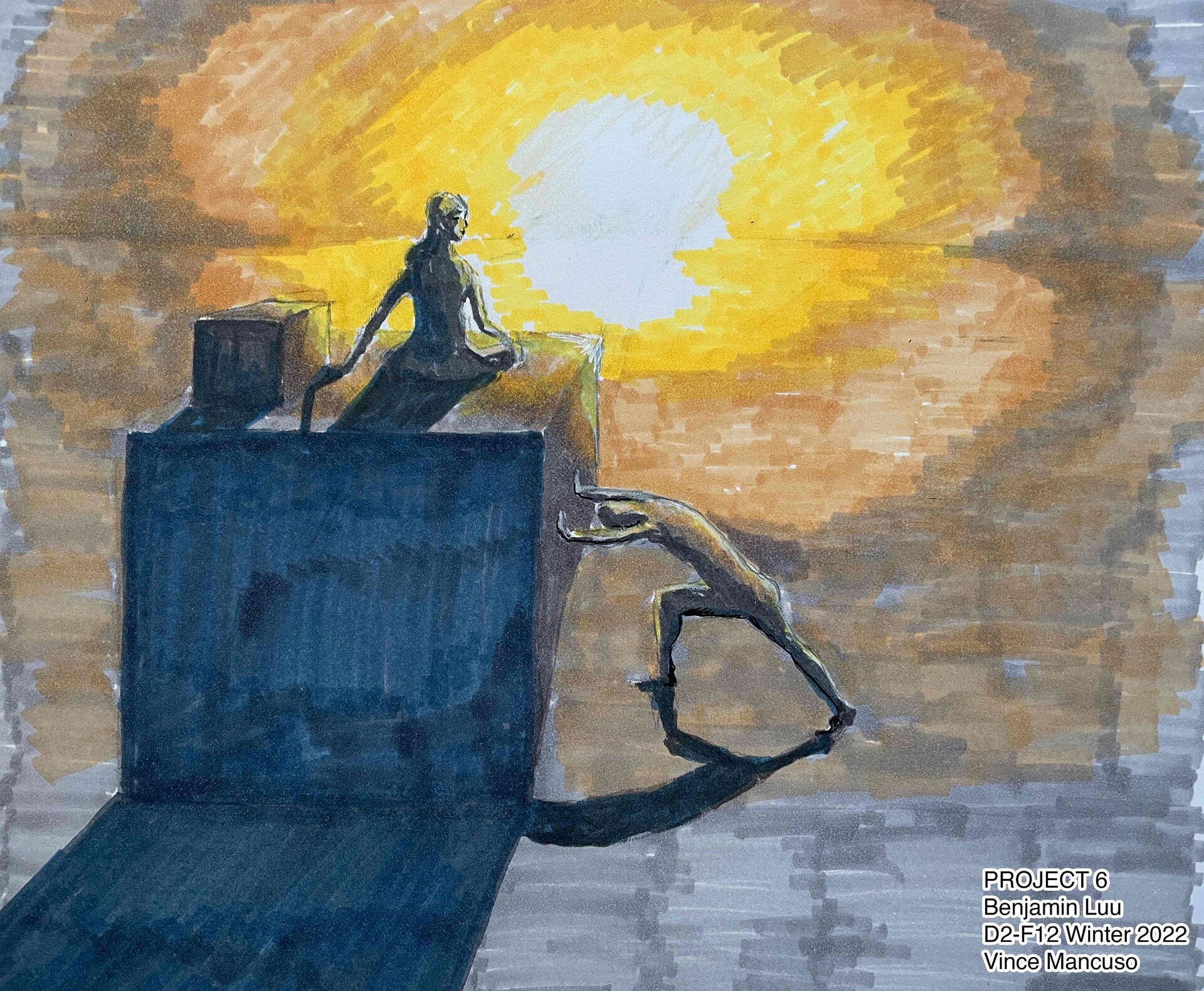
Student sample
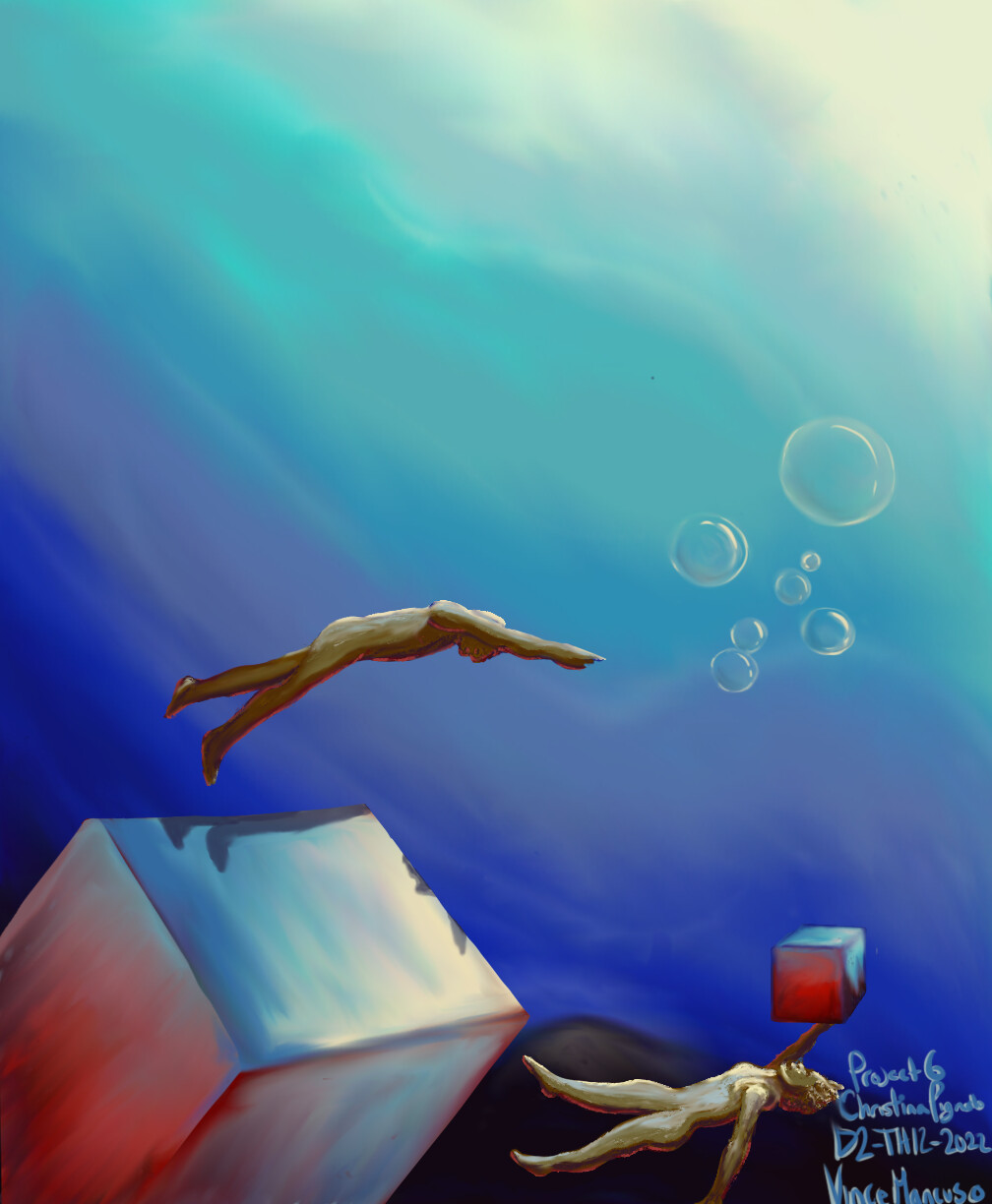
Student sample
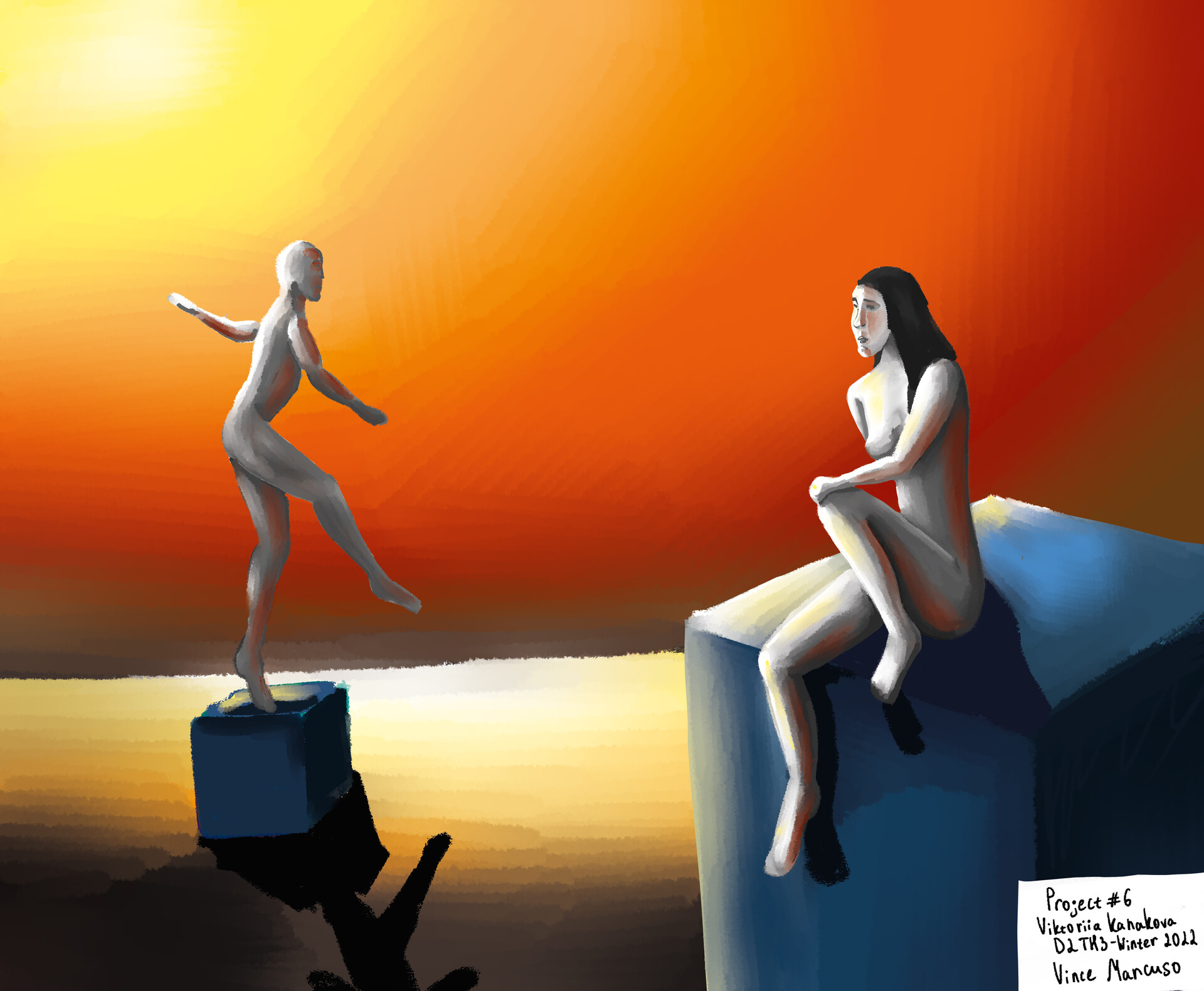
Student sample
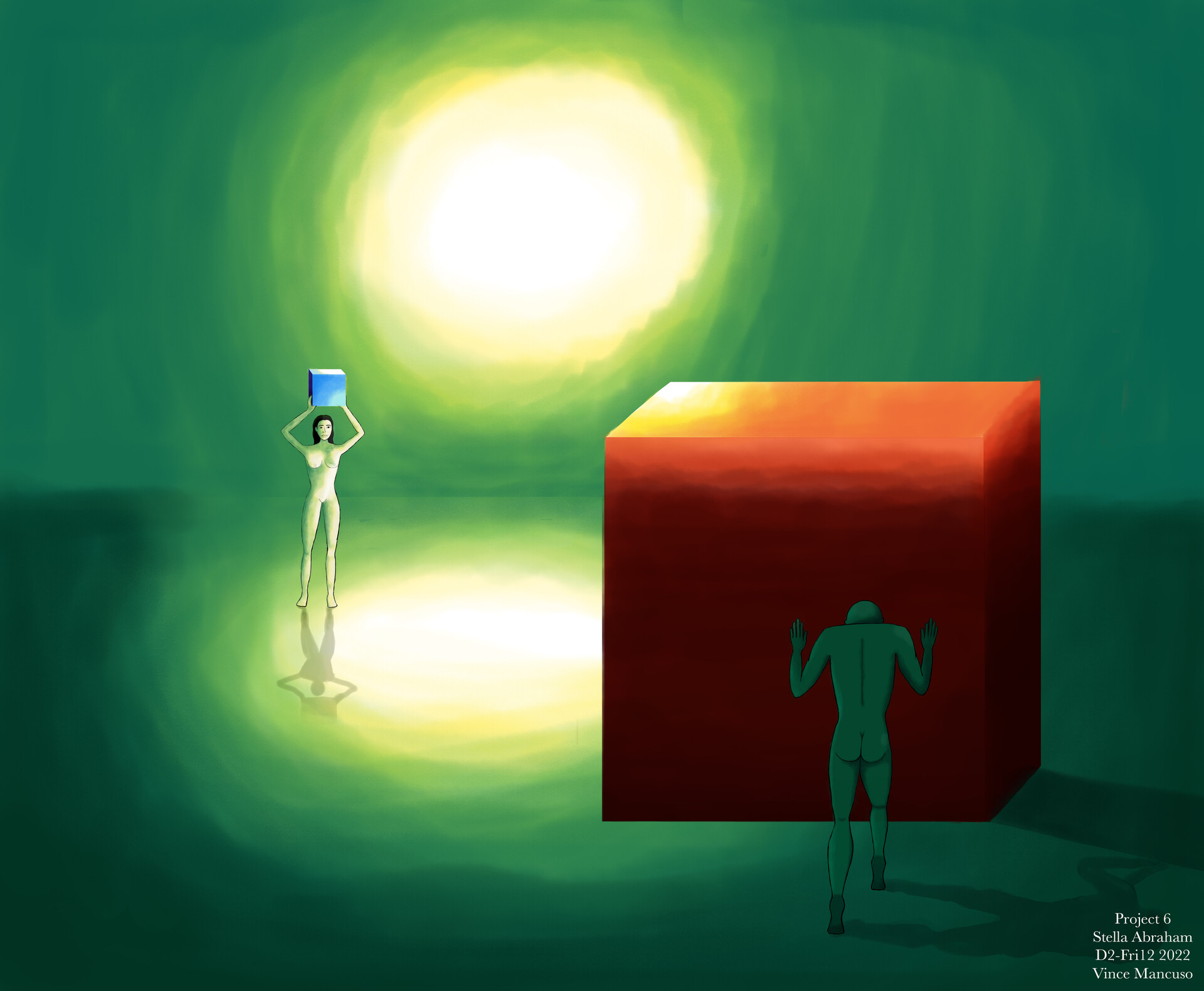
Student sample
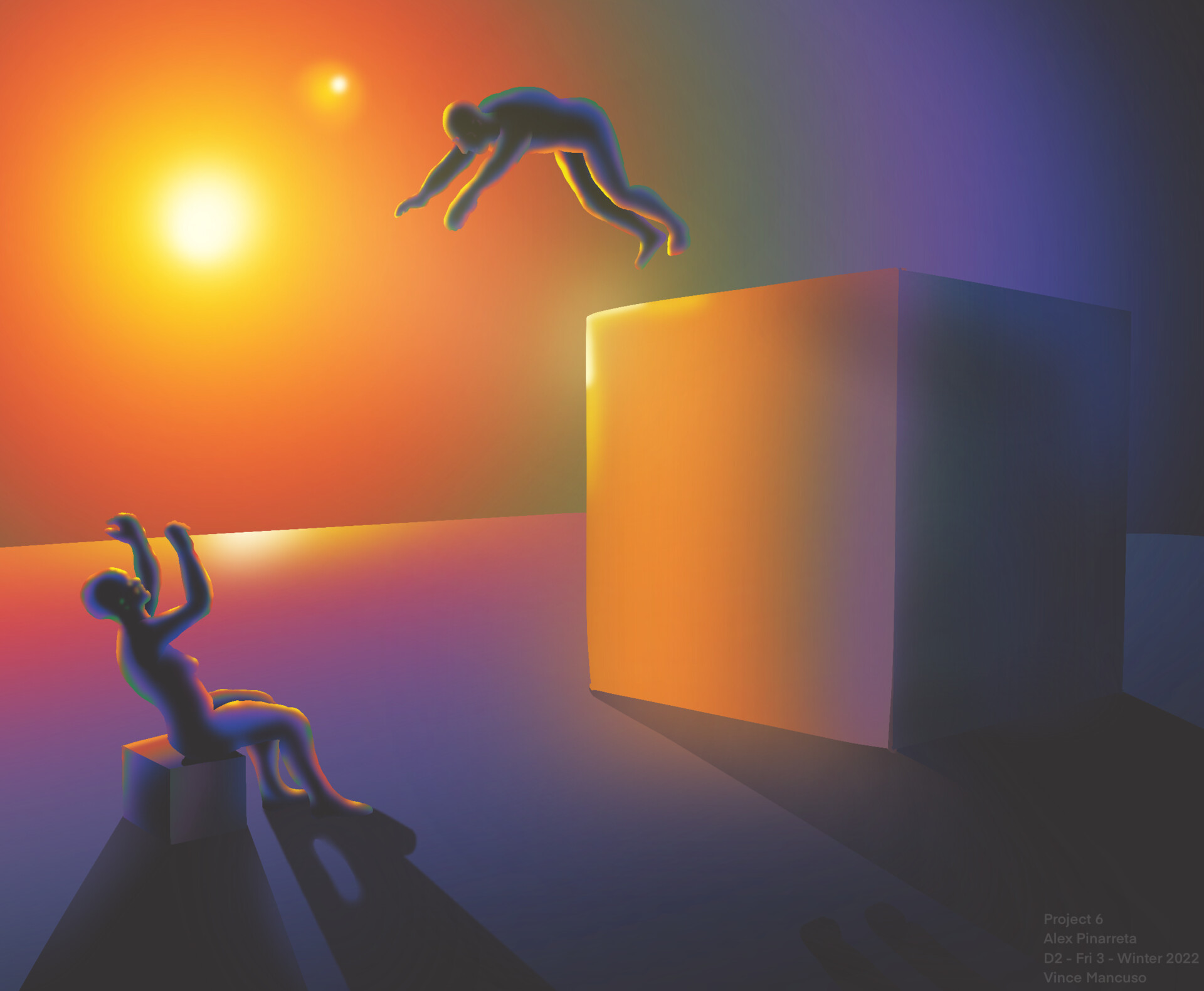
Student sample
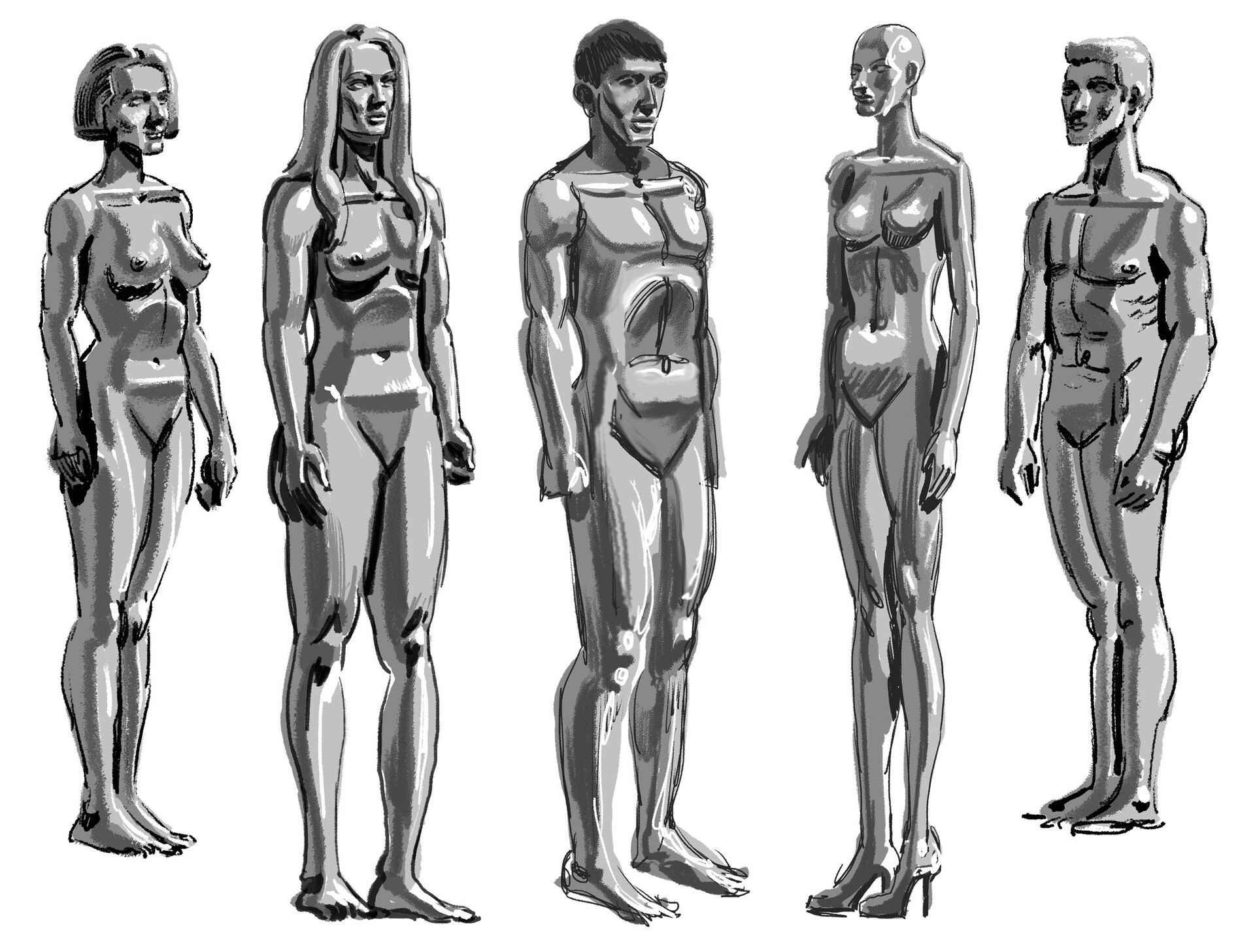
Remember the rules of 3D and apply them to the cubes and to the figures. Combine that with radiant light .